

Your boat has a name, a story, and a silhouette that's instantly recognizable to anyone who sails the same waters. It makes sense that you'd want to wear it.
Whether you're outfitting a crew for race day, making matching shirts for a charter trip, or just want something to wear at the yacht club that actually represents your boat, a custom sailboat shirt is one of those projects that sounds simple but has more decisions than you'd expect.
This guide walks through the full DIY process: what to think about before you start designing, what materials and printing methods actually work, and where to get it made. And if you'd rather skip the project entirely, there's an easier option at the end.
First, Decide What the Shirt Is For
Not all sailing shirts are the same. What you're planning to do with it changes everything: the fabric, the fit, the design complexity, even the printing method.
Casual crew shirts are the most common. These are the shirts your crew wears to the bar after a race, or what you hand out to guests after a weekend on the water. Comfort and style matter more than performance. A soft cotton tee with your boat name and a clean graphic does the job.
Performance sailing shirts are a different category. If you're racing in July or doing coastal deliveries, you want moisture-wicking fabric, UV protection, and a fit that works under a PFD. Cotton is a poor choice here. It absorbs water, gets heavy, and stays cold.
Boat branding shirts are about visibility. If you run charters, teach sailing lessons, or just want your boat to have a recognizable identity at regattas, you need a clean logo, consistent colors, and a design that reads well from a distance.
Know which category you fall into before you start designing. It'll save you from ordering 20 cotton tees when you really needed something that dries in 15 minutes.
Designing the Shirt
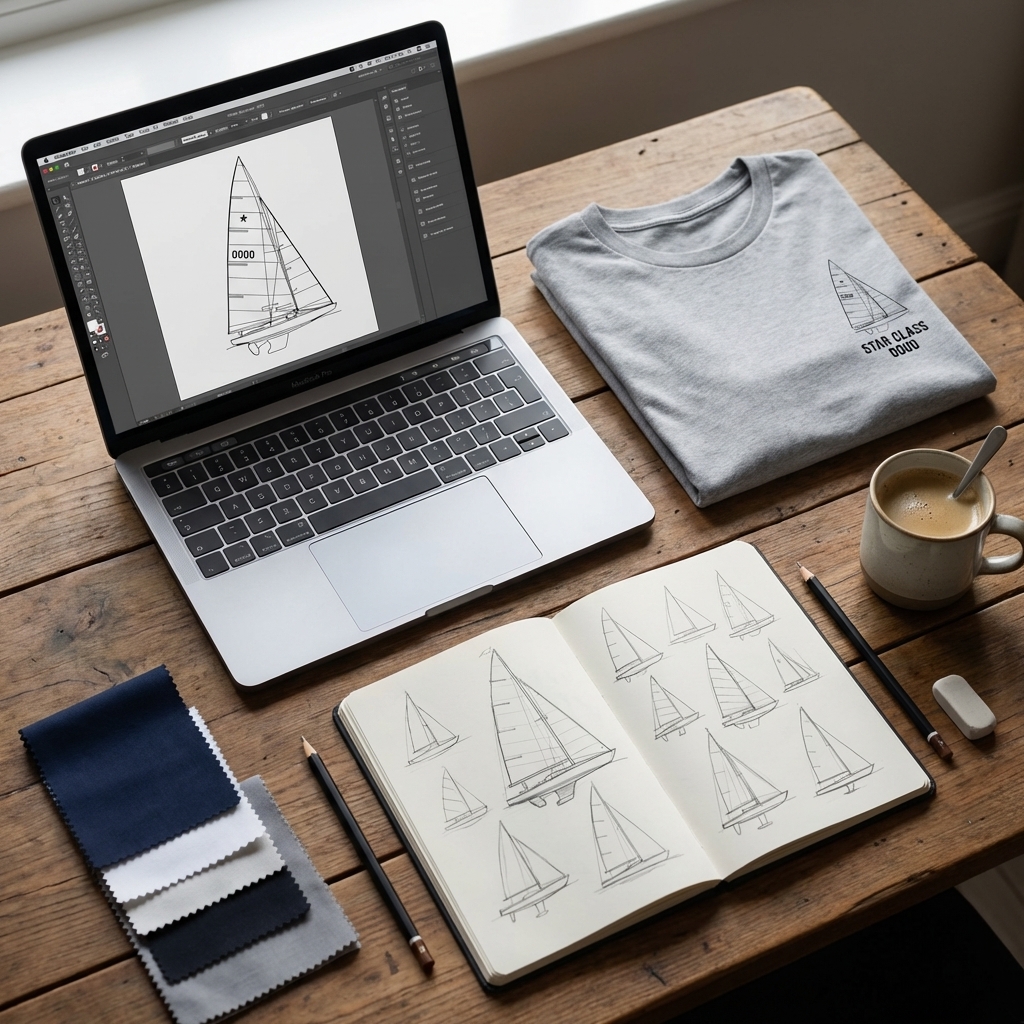
This is where most people get stuck. You know what you want the shirt to feel like, but translating that into an actual print-ready file is a different skill set.
What to Include
Most custom sailboat shirts use some combination of these elements:
- Boat name, the anchor of the design, usually on the chest, back, or both
- Sail number, especially for racers, since it's your identity on the water
- Home port, which adds context and pride of place
- Boat silhouette or line drawing, which makes the shirt unmistakably yours
- Crew names, fun for race teams, charter groups, or annual trips
- Nautical graphics like signal flags, compass roses, coordinates, or wave lines
The best designs pick two or three of these elements and keep it clean. The worst designs try to include all of them and end up looking like a marina bulletin board.
Design Tools
If you're doing it yourself, you have a few options.
Canva is the easiest starting point. The free tier has enough templates and drag-and-drop tools to build a decent shirt graphic. It won't give you the same level of control as professional software, but for text-and-graphic layouts, it works.
Adobe Illustrator is the pro-level option. If you're comfortable with vector design (or willing to learn), Illustrator gives you complete control over every curve and anchor point. Most print shops prefer Illustrator files because they scale perfectly to any size.
Hire a designer. If design isn't your thing, Fiverr and 99designs both have freelancers who specialize in apparel graphics. Budget $50 to $150 for a custom sailboat shirt design. Give them a photo of your boat, your boat name, and two or three reference designs you like.
Use vector graphics. This is the single most important technical tip. Raster images (JPEGs, PNGs) get blurry when you scale them up. Vector files (SVG, AI, EPS) print cleanly at any size. If you're paying a designer, ask for vector files. If you're using Canva, export at the highest resolution available and hope for the best.
Picking the Right Shirt
The blank shirt you print on matters more than most people realize, especially for sailing.
Cotton
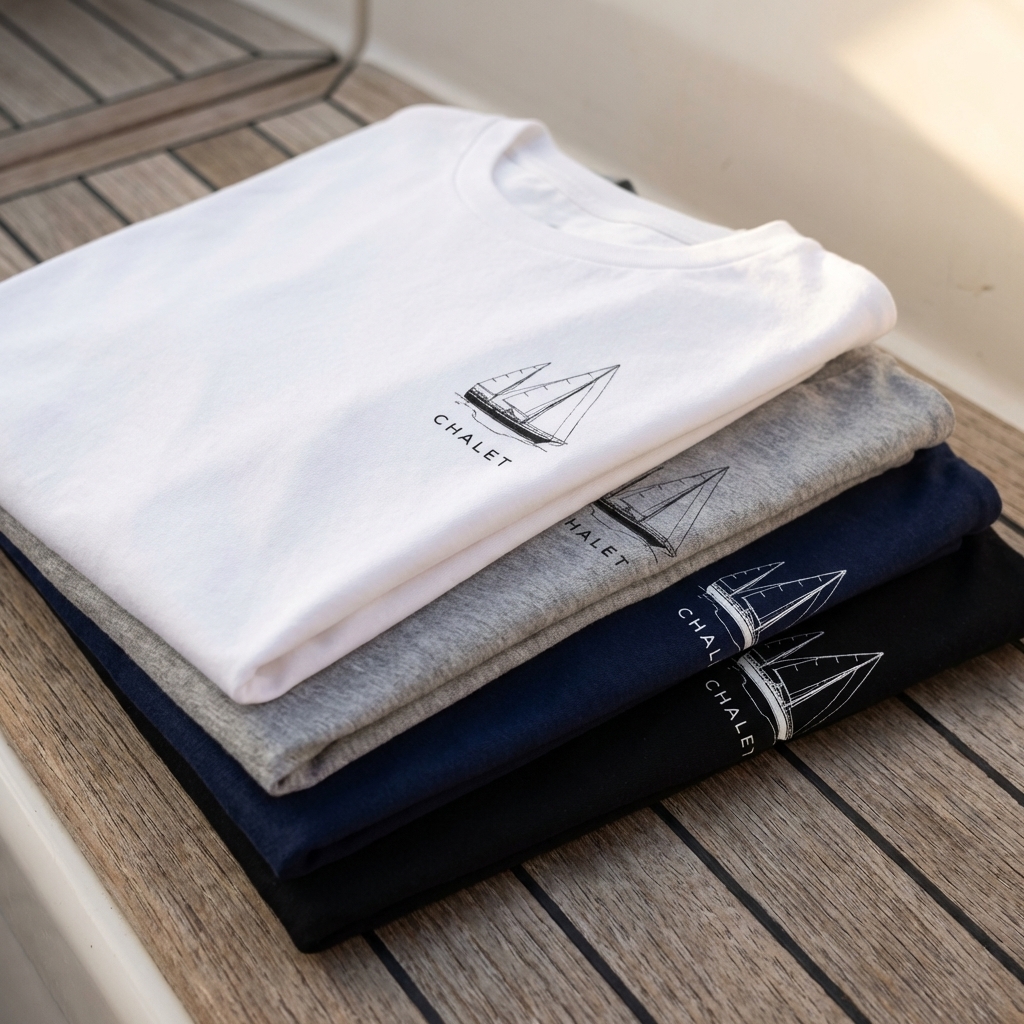
The classic choice. Soft, comfortable, takes ink well. Cotton tees are great for casual wear on shore, at the dock, or at the yacht club. The downside: cotton absorbs water, takes forever to dry, and gets heavy when wet. Not ideal if the shirt might see actual sailing.
Polyester and Performance Blends
If you want a shirt that works on the water, a poly-cotton blend or full polyester tee is a better bet. These fabrics wick moisture, dry fast, and breathe better in heat. The tradeoff is they don't feel as soft against skin, and some printing methods don't work as well on synthetic fabrics.
UPF-Rated Shirts
For serious sun protection, look for shirts with a UPF rating. UPF 50+ blocks 98% of UV radiation. Brands like Helly Hansen and Gill Marine make performance sailing shirts with built-in UV protection. The catch: these shirts are usually more expensive, and custom printing on performance fabrics requires specialized equipment.
The Sweet Spot
For most sailors making a custom shirt, a ring-spun cotton tee (like the Bella Canvas 3001) hits the right balance. It's soft enough for all-day wear, lightweight (4.2 oz), and prints beautifully with DTG. It's not a performance shirt, but it's the one you'll actually reach for on shore days, bar nights, and weekend trips.
Choosing a Printing Method
You've got a design and a blank. Now you need to get the ink on the fabric. Each printing method has real tradeoffs.
Screen Printing
The oldest and most common method. A screen is created for each color in your design, and ink is pushed through the mesh onto the shirt.
Pros: Extremely durable prints. Vibrant, opaque colors. Cost per shirt drops significantly at volume (50+ shirts).
Cons: Setup costs are high ($25 to $75 per screen/color). Not economical for small batches. Limited to relatively simple designs. Photographic images or heavy gradients don't translate well.
Best for: Race teams ordering 50+ matching crew shirts with a simple 2 or 3 color design.
Heat Transfer / Vinyl (HTV)
A design is cut from colored vinyl and heat-pressed onto the shirt.
Pros: Great for names and numbers. No minimum order. Easy to customize each shirt (different crew names, different numbers).
Cons: The vinyl layer sits on top of the fabric, so it's slightly less breathable. Can peel or crack over time, especially with heavy washing. Limited color blending, since each color is a separate layer.
Best for: Small batches where each shirt needs different text (crew names, positions).
Direct-to-Garment (DTG)
A specialized inkjet printer prints directly onto the fabric. Think of it like a paper printer, but for shirts.
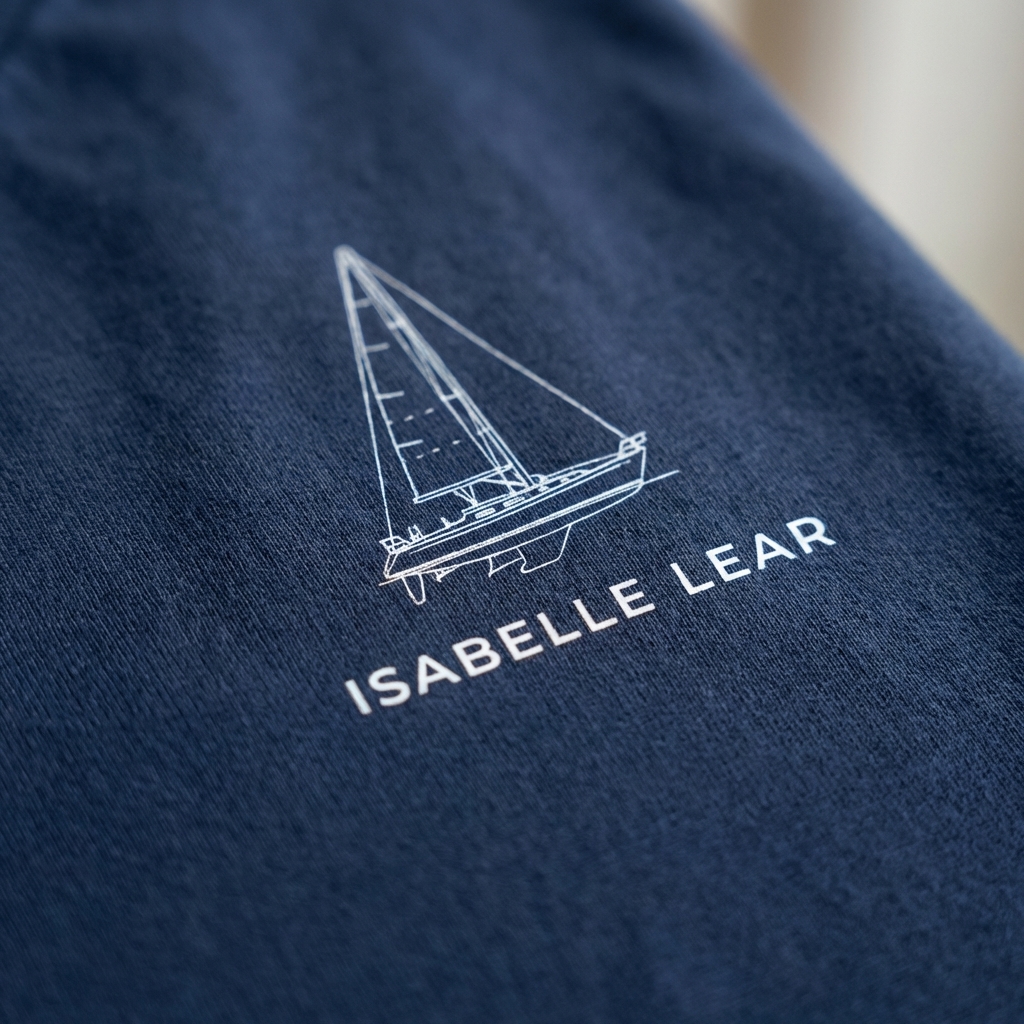
Pros: Full-color, detailed designs with no limits on complexity. No setup costs. Economical for single shirts or small batches. Soft hand feel, because the ink soaks into the fabric rather than sitting on top.
Cons: Slightly less vibrant than screen printing on dark fabrics (though white ink bases have improved). Not ideal for very large orders (screen printing is cheaper at scale). Best results on 100% cotton or high-cotton blends.
Best for: Detailed designs with lots of colors, small batches, or one-off custom shirts.
Embroidery
Thread is stitched directly into the fabric using a computerized embroidery machine.
Pros: Premium, professional look. Extremely durable, since thread doesn't fade or crack like ink. Great for polos, quarter-zips, and jackets.
Cons: Expensive per unit, especially for large or complex designs. Limited detail, since fine lines and small text don't translate well. Adds weight and stiffness to the fabric.
Best for: Yacht club gear, charter company uniforms, or a premium polo with your boat name.
Where to Get It Made
Online Custom Shops
The most convenient option. Upload your design, pick your blank, and they handle the rest.
- Custom Ink. Good for group orders. Strong design tools. Screen printing and DTG available.
- Printful. Print-on-demand, no minimums. Good for one-offs or setting up an online store for your crew. DTG and embroidery options.
- Vistaprint. Decent for basics, but their apparel quality and print quality are a step below the others.
The downside of all online shops: you can't feel the fabric or see the print before committing. Color matching can be unpredictable. And you're limited to whatever blanks they stock.
Local Print Shops
Worth considering if you have one nearby. You can see samples, feel the fabric, and work with a real person to dial in the design. Many local shops will do small runs (even single shirts) and can offer advice on what works. The downside is price. Local shops are usually more expensive than online, especially for small orders.
The DIY Route
If you own a Cricut or Silhouette cutting machine, you can make heat-transfer vinyl shirts at home. This works well for simple text and shapes. It does not work well for detailed graphics, photographic images, or anything you want to last more than 30 washes.
Pro Tips for Sailing Shirts
A few things that aren't obvious until you've done this before.
Put the small logo on the front, the big graphic on the back. A chest-pocket-sized logo (3 to 4 inches) on the front keeps things clean when you're wearing a PFD. The back is where you have room for a full boat illustration, crew names, or event details.
Use light colors for hot-weather sailing. White, light grey, and light blue reflect more heat than navy or black. Your crew will thank you during August races.
Avoid heavy prints where life jackets sit. Thick screen prints or vinyl across the chest and shoulders can feel uncomfortable under PFD straps and can crack faster from the friction. DTG prints are thinner and hold up better in these areas.
Add your boat's silhouette. This is the single best way to make a sailboat shirt that actually looks custom rather than generic. A clean line drawing of your specific boat model makes the shirt instantly recognizable to anyone who sails the same type.
Consider the wash. Sailing shirts get salt, sunscreen, sweat, and who knows what else on them. They get washed hard and often. Choose a printing method and blank that can handle it.
Or Skip All of That
Here's the thing: the DIY route works, but it takes real time and effort. You need to find or create a design, figure out the right blank, choose a printing method, find a vendor, and hope the colors and placement come out right. For one shirt, that's a full afternoon project. For a run of crew shirts, it's a multi-day commitment.
Sailboat Shirts exists specifically for sailors who want a custom shirt without the project.
Here's how it works: we maintain a growing library of detailed line drawings of popular sailboat models. Catalinas, Hunters, Beneteaus, J/Boats, and dozens more. You pick your boat model, add your boat's name, and we print it on a premium Bella Canvas 3001 tee using DTG.
The result is a shirt that features your actual boat's silhouette. Not a generic clipart sailboat, but the specific lines of your model. Your boat name sits right where it should. And because it's DTG on ring-spun cotton, the print is soft, detailed, and built to last through a season of sailing and washing.
No design skills required. No minimum order. No choosing between 47 different blanks and printing methods.
Sailboat Shirts makes custom apparel for sailors who actually sail. Each shirt features a detailed line drawing of your specific sailboat model with your boat's name. See available boat models.